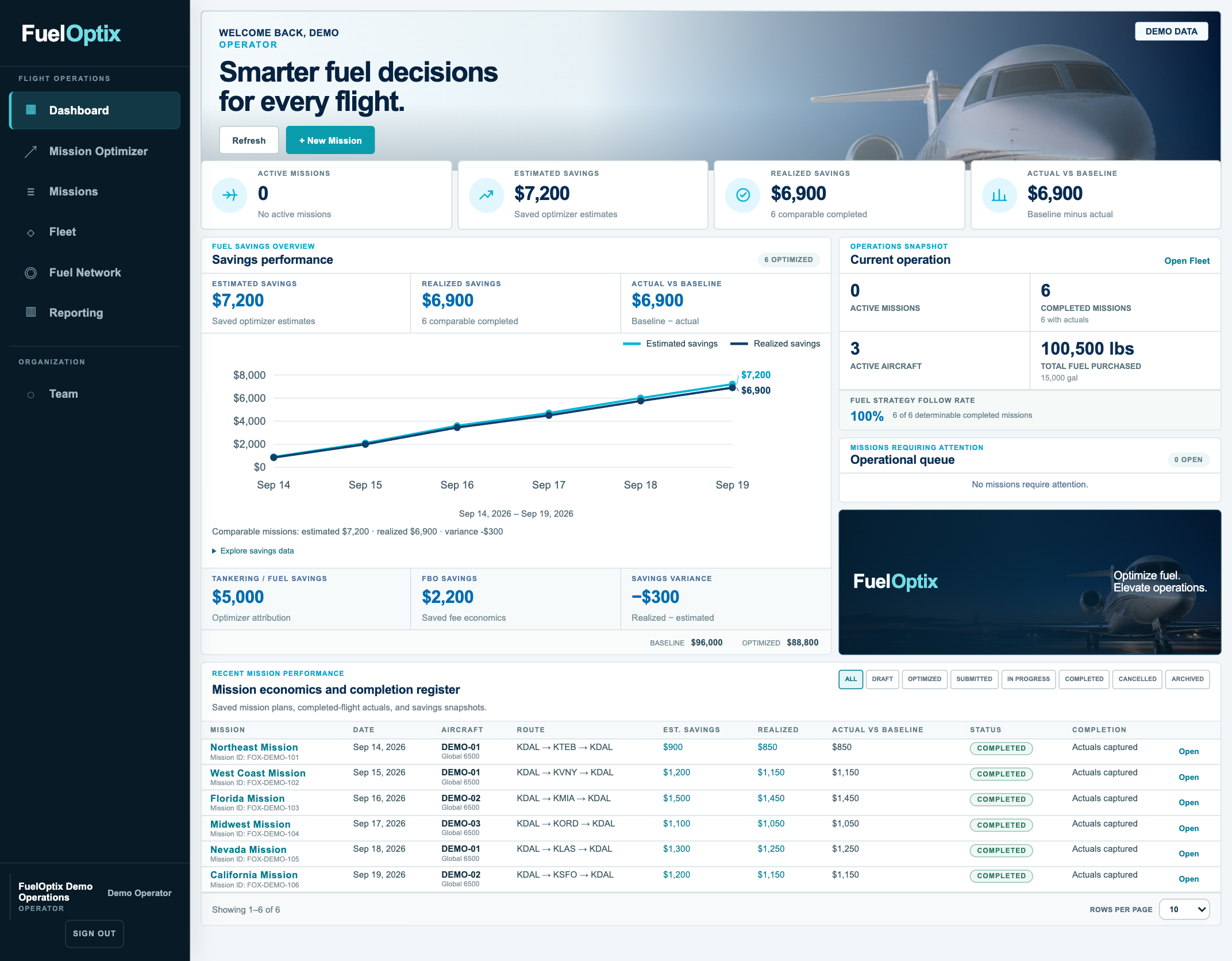
See the impact of fuel decisions across your operation.
Review tankering strategies, fuel purchasing costs, and estimated savings alongside eligible completed-mission outcomes.
See fuel strategy estimates and completed-mission outcomes across the operation.
- Review mission activity across your aircraft.
- Compare estimated and eligible realized savings, with savings variance for context.
- Keep fuel purchasing and fee benefits distinct when reviewing results.
Evaluate purchasing and tankering options across your itinerary.
- Bring aircraft, mission legs, and flight-plan fuel requirements together.
- Compare entered fuel prices, fees, and applicable uplift-based waivers.
- Review recommended purchases, estimated costs, and the additional burn from carrying fuel.
Follow saved fuel strategies from planning through completion.
- Review missions by aircraft, itinerary, and status.
- Return to saved purchasing recommendations.
- Review available completion records to assess financial outcomes.
Maintain the aircraft information used to evaluate fuel strategies.
- Manage aircraft information, fuel capacity, and operating limits.
- Control which aircraft are active for new missions.
- Keep historical fuel decisions associated with their saved aircraft.
Keep available pricing and fee information together for purchasing comparisons.
- Maintain supplier pricing by airport and aircraft applicability.
- Record handling fees and uplift-based waiver conditions.
- Use applicable saved records when comparing fuel purchasing options.
Review fuel spending and savings in the context of completed missions.
- Review recorded fuel purchases and mission costs.
- Compare estimated savings with eligible realized savings and variances.
- Review results by aircraft, mission status, and date.
Connect pilots with the organization’s fuel strategy workflow.
- Invite pilots to the organization.
- Manage pilot access to the shared workflow.
- Connect individual mission decisions with the operator’s view of results.